The Prayer Workshop: God is Working His Magic
When we are met with silence, we assume we aren't heard. That's not the case.

I eat dinner at the counter again. The stool next to me has my jacket draped over it that’s been there since I moved in. Eight months now. I keep meaning to hang it up.
The apartment is fine. The job is fine. The city has little cafes and a farmer’s market on Saturdays and I’ve been to it twice. Both times alone, both times home by ten and nothing to do the rest of the day.
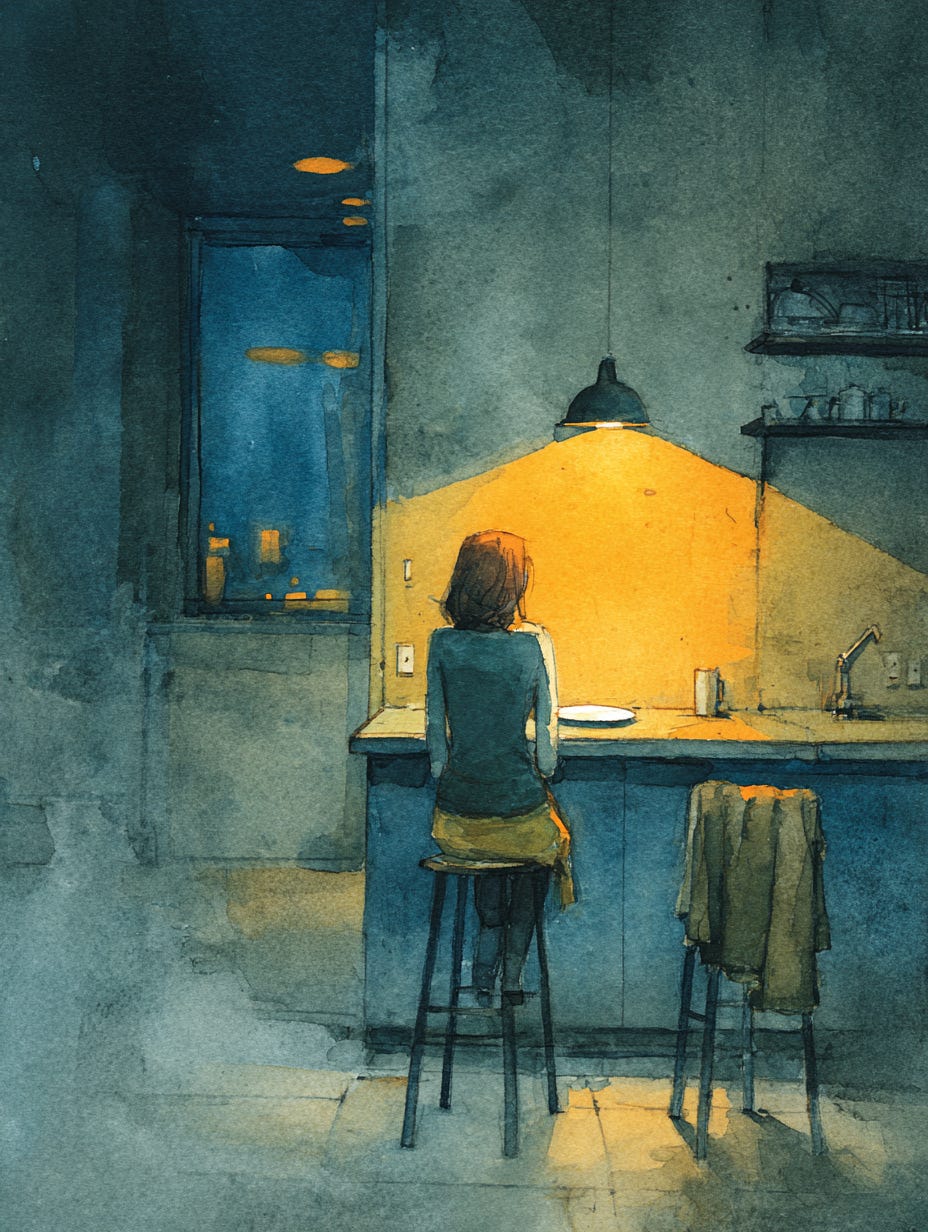
I wash the dish and the fork and set them in the rack and stand there with the water still running, looking at the wall blankly.
I sit on the edge of the bed that night and fold my hands and close my eyes. The prayer is small. I almost don’t say it.
But I say it anyway. Barely full sentences. Just: God, I’m tired of this. I don’t know how to fix it. I don’t want to be alone.
I open my eyes. The room is the same. Nothing has stirred.
I go to bed.
The workshop is warm and full of light, but the light is different. Otherworldly.
Along the far wall, glass tubes run from the bench to ceiling. They hum faintly, ready to deliver outgoing messages.
There’s a golden tube set apart from the rest. It runs in the other direction than all the other tubes, delivering messages to those in the workshop.
Patty is sorting through the evening’s notes when her granddaughter’s prayer comes in. It arrives through one of the tubes with a soft thud, as a folded letter. She unfurls it and reads the handwriting she’s known for years.
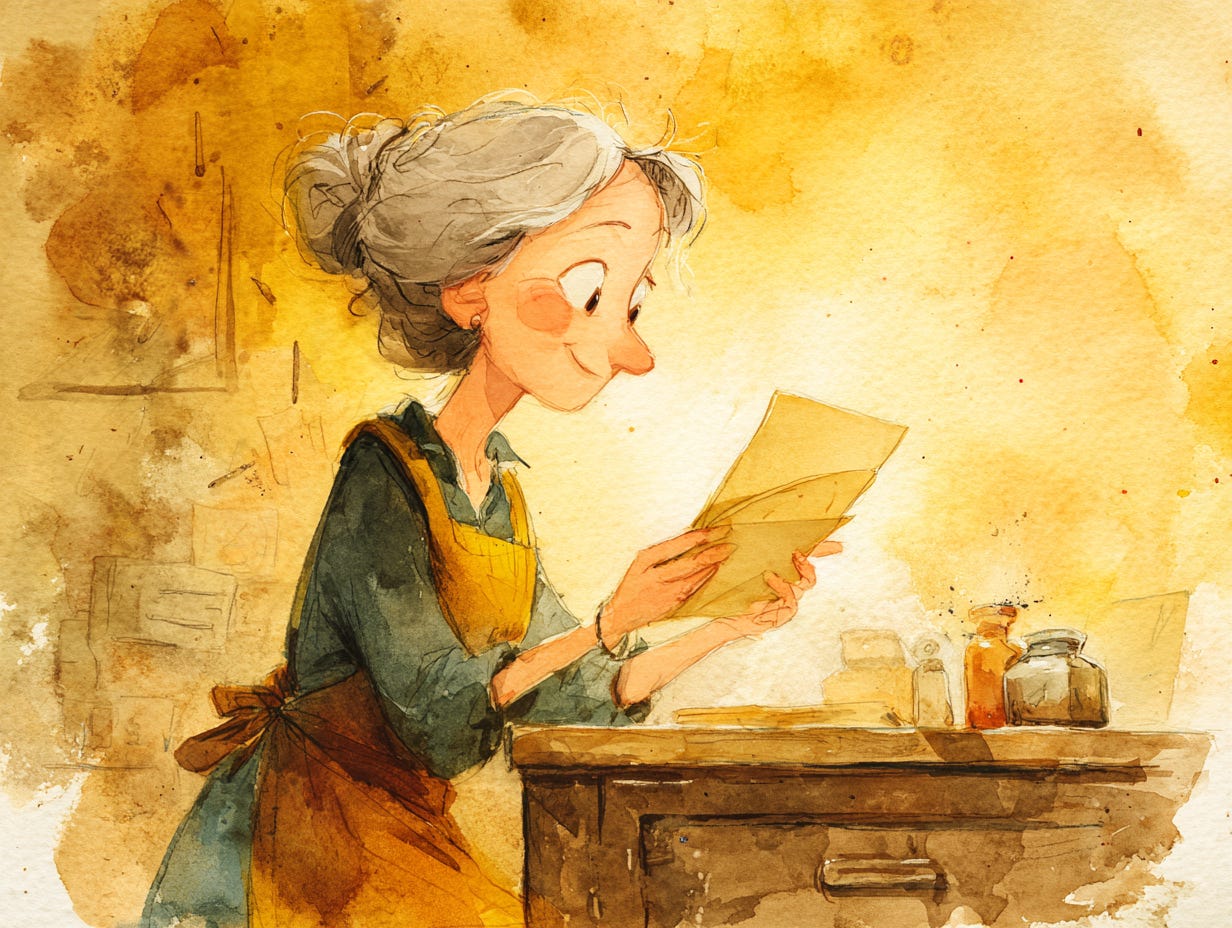
God, I’m tired of this. I don’t know how to fix it. I don’t want to be alone.
“There’s my girl,” Patty says with a twinkle in her eye.
Across the bench, James looks up. He is older than Patty by several generations. He came to this work long before she did.
“From the apartment?” he asks.
“Yep.” Patty turns the notes to him. “She ate at the counter again. Not the table. She hasn’t used the table once since she moved.”
James reads the note and nods slowly. “She almost didn’t say this.”
“She almost never does.” Patty touches the edge of the paper. “She thinks it’s too small to ask about.”
The golden tube hums. A scroll drops into the opening at its base, warm to the touch. The answer that was on the way before the prayer was even started, the way always goes.
They both look at it.
“Never too small,” James says quietly.
Patty smiles. “Not even close.”
Patty unfolds the scroll. The handwriting is unhurried, specific, and full of love. She reads it once and sets it on the bench where James can see.
A person. Send her a person.
She nods. Her granddaughter builds walls so polite that nobody notices they’re walls. She’ll smile at the waiter. She’ll wave to the neighbor. She’ll go home and sit in the quiet and tell herself she’s fine.
“A person,” Patty repeats. “Someone who won’t let her brush her off too quick.”
The golden tube hums again. Another scroll.
Anne. The woman in 4C. She’s been meaning to knock for three weeks.
Anne, one floor up. Moved in a year before Patty’s granddaughter did. She noticed the girl carrying groceries alone every Saturday and thought about introducing herself and didn’t. Made too much soup last Tuesday and almost brought some down and talked herself out of it.
“She’s been circling,” James says. “For weeks.”
He grins. “She makes too much soup on purpose, you know. She’s been hoping for an excuse.”
Patty laughs. “Then let’s give her one.”
Patty takes a slip of parchment from the bench and begins writing. Just a thought that might cross a woman’s mind while she’s standing in her kitchen with too much soup. She writes it down in small careful letters: You should go check on her.
She rolls the note tight and sets it in one of the glass tubes. Inside the tube, it changes. The paper thins into light: a warmth, an impression.
Anne is wiping down her table after dinner. The pot of soup is still on the stove, too much again. She ladles the leftovers into a container and opens the fridge and stands there looking at the three other containers already stacked inside.
Something settles in her chest. Not a thought. Lighter than that. A pull, like remembering something she forgot to do. She stands there with the container in one hand and the fridge door open.
She thinks about the girl downstairs. She’s thought about knocking before. She’s talked herself out of it every time. She probably has her own people. She probably doesn’t want some stranger showing up with soup.
The feeling doesn’t fully leave. It sits there, patient.
Anne closes the fridge. She picks up the container. She walks to the door, and then past the door to the stairs.
The knock comes when I’m brushing my teeth. I almost don’t answer. Nobody knocks on my door.
I open it and a woman is standing there holding a container of soup. She’s in slippers and a cardigan and she looks almost as surprised to be here as I am to see her.
“I’m Anne,” she says. “I live upstairs. I made too much soup and I thought, well.” She holds out the container. “Do you like tomato basil?”
“That’s really sweet. I actually just ate, but thank you.”
She nods, but she doesn’t move. “You could save it for tomorrow. Or, I mean, you’re welcome to come up sometime. I always make too much.”
I’m about to say that sounds great in the way that means I’ll never do it, but she’s still standing there, and something in her face tells me she didn’t come down here just because of the soup.
“Do you want to come in?” I hear myself say. “I have these little pastries from the farmer’s market.”
Her face lights up. “You go to the Saturday market?”
“I’ve been twice.”
“I go every week. The stand with the almond croissants?”
“The one on the corner with the yellow sign.”
“That’s my favorite stand.” She’s already stepping inside. “I can’t believe we’ve never run into each other.”
She sits at my table, the one I never use, and I put the pastries on a plate and she heats the soup anyway and we eat across from each other and she tells me about her job at the library and her cat who only likes her sister. I tell her I moved here eight months ago for work. I tell her I haven’t really found my people yet. I say it like it’s nothing and she nods like she heard what I actually meant.
She stays an hour. When she leaves she says, “I make too much food all the time. Tuesdays are usually soup. Saturday I’ll be at the market by nine if you want to come.”
I sit on the edge of the bed that night. The apartment is quiet, but the table still has two place settings and the container on the counter says Anne, 4C — bring it back whenever in purple marker on a strip of tape.
I fold my hands. Close my eyes.
I get three words in and stop.
Anne in her slippers, holding soup, looking almost as nervous as I was. I made too much. She sat at my table like it was the most natural thing in the world. She heard what I actually meant when I said I hadn’t found my people.
She’d been meaning to knock for weeks. I almost didn’t open the door.
I sit there in the dark with my hands still folded and something quiet moves through my chest. Not a thought. A knowing.
I fold my hands again. The words come easier this time.
In some other unknown dimension, two angels smile.
This is a really lovely piece, no prayer is actually to little and God knows the best ways to answer our prayers-we may not even understand how it’s happening till it happens . 👏🏾
I hope this is how it really is…I suspect it’s pretty dang close! I had an experience like this at Adam’s wedding I’ll have to tell you guys about.